
by | | The Blog
There are two very interesting schools of thought as it pertains to pricing and consumerism. One theory is if you want to move more product, reduce the cost; thereby increase your target market to include a wider economic base as well as make your current market more tempted to buy because everyone simply loves a good deal. The other theory, fascinatingly enough, is jack up the price a ridiculous amount; thereby draw attention to it, both positive and negative, and create the perception of an inflated demand for such an elite, exclusive item. An item that must be worth the extra money because why else would it be priced that way? Such is the case of Nike’s new LeBron James shoe, priced at a record setting $315.
Predictably, despite the floundering economy, consumers are expected the flock the stores and snap up these overpriced status symbols like hotcakes, spurring praise and criticism of every layer of the transaction. Some question what kind of message it sends that in spite of people struggling to make ends meet, they still find it perfectly acceptable to drop an outrageous amount of money on shoes. Others question the lack of social responsibility of the athletes the shoes are named after, by suggesting their influence on young people is being abused.
Nothing democratizes power more than the free market. If Nike wants to charge too much for a pair of sneakers and people are willing to shell out their own money to pay for them, who are we to judge?
Notice I said, “their own money.”
While some may look at the booming sales of such an extravagant item as a sign of a recovering economy, I caution that optimism. How many customers are on food stamps, welfare, or unemployment? How many people have you seen below the poverty line talking on a bedazzled smartphone? How many kids will be walking around wearing the LeBron shoe with parents on government assistance of some kind? These are real issues that justify the criticism of an otherwise innocuous economic scenario.
This country definitely has real economic problems. But just as real is the problem with priorities; Fueled by out of control and easily abused entitlement programs. When I drive by a mall on Saturdays and see full parking lots, my first thought isn’t, “The economy is improving”. Unfortunately it’s, “How many people whose basic needs are being supported by tax payers so they can buy Gucci jeans?”

by | | The Blog
If an investment had no risk, no downside, no threat of loss, then success is meaningless. Such is the apparent case of the 2012 games in London as far as the assumptive shot-in-the-arm to the economy is concerned. This is according to economist, Nouriel Roubini in an MSN article entitled, London Olympics an Economic Failure.
“…London is totally empty: hotels, restaurants, streets,” Roubini tweeted. “…A zombie city.”
In many economic scenarios from a consumer confidence standpoint, perception can equal reality. Example: People perceive a bank is losing money and going broke. The result? People get scared, take their money out of the bank and the bank loses money and goes out of business. In some cases however, perception can equal the direct opposite effect. The positive economic predictions were also accompanied by a wave of apprehension. In this particular case, UK Policymakers warned that the expected extra million visitors a day would surely bring enormous pressure on the city’s public transport network and overcrowding in the city’s busiest districts. The result? Most Londoners left town or worked from home during the games while most of the tourists kept to the Olympic venues, villages and private parties; thereby avoiding the city’s biggest attractions located in London’s West End.
Almost exactly the same thing occurred 16 years ago at the Atlanta games. The weeks leading up to the Olympics were buzzing with rumors which saturated the city’s residents of the catastrophic traffic nightmares that would most assuredly gridlock their entire infrastructure. As a result, the brave folks that took the risk enjoyed a veritable highway heaven on the way to work because of the mass avoidance of the interstate system.
The bottom line is this: With as much preparation, research, and comparables you have at your disposal, there simply is no sure thing when it comes to investments. There’s always a risk, whether it be from the millions invested by a booming metropolis like London, to a five dollar bet at the Blackjack table. It’s not exactly Las Vegas. But it isn’t entirely unlike it either.

by | | The Blog
Pop Quiz: If someone were to offer you an investment where you can pay more than the minimum contribution, but not less, which would result in loss of previous contributions, the money is not safe from loss of principal, is less safe with each payment, is not liquid, earns 0% rate of return, the tax liability increases with each payment, and when fully funded, no income is paid out, would you be interested? Before you passionately answer “no” with possible expletives, I just described your home.
The ripple effects of a bad economy permeate every facet of our lives in a very real way, and your house is no exception. In fact, recent reports on the significant drop in median net worth of families are in part a direct result of the dropping housing values. Your home as an investment these days look more and more like automobiles; which as most of us know, are no investment at all, especially when taking into account the interest, taxes, repairs, insurance and other costs of maintaining it. They’re more of an accomplishment, a status symbol, a check box off your American dream list; which is fine as long as houses are similarly regarded.
To ensure that you continue to win the money game, view your home as a place to live…not an investment, not a place to park your money and certainly not an ATM for heaven’s sake. The only tangible benefit to owning a home is hopefully over time, you will build enough equity to be able to transfer your debt over to a bigger home. In the meantime, I refer you to the inspirational phrase, “Life Is What Happens When You’re Making Plans” as it pertains to being a homeowner. You have a house. Enjoy it, make it a home, make memories and be thankful you can still pay the bills on time. It is a nest, not a nest egg.
The days of mortgage burning parties are over.
by | | The Blog
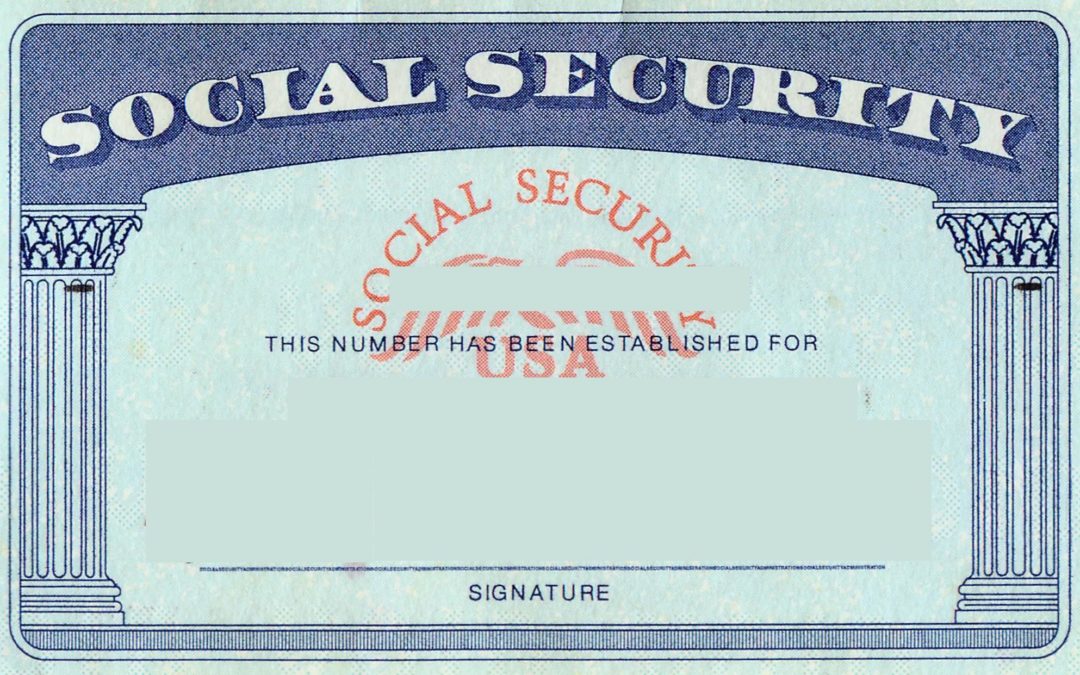
I just Googled “Social Security” and got 1.08 billion hits. Needless to say, it’s a hot topic. Without even clicking on those links, I know what most of them have in common.
It’s not good.
As most of us know, Social Security began as a measure to implement a “social insurance” of sorts during the Great Depression, when more than half of our seniors were living in poverty. Unfortunately, as with most government programs, it has become a mathematically unsustainable safety net that too many people have relabeled “retirement plan.”
My advice, at least for those of us still in the workforce, is this: If you’re planning on Social Security to be your main retirement income, don’t. It was never created for that purpose and the numbers simply don’t and won’t add up. In fact, if it were just another investment option, it would be regarded as the worst.
I can already hear people saying, “I’ve been paying FICA most of my life and that money is mine!”
Sure. Maybe. Some of it. Maybe.
Our parents and grandparents got a great return on their investment in Social Security — seven times more in benefits than they’d paid in, if they retired in 1960 and lived to 78 (men) or 81 (women.)
As recently as 1985, workers at every income level could retire and expect to get more in benefits than they paid in Social Security taxes.
Today, retirees are actually receiving less than they paid in, according to Urban Institute, a Washington think tank. And with the gargantuan baby boomer generation hitting retirement age this year, expect our beleaguered Social Security system to start crumbling at the knees.
Social Security’s trustees say the money will be gone – despite what comes out of our paychecks — in 2033. At that point, payroll taxes will provide enough revenue each year to pay about 75 percent of benefits.
Bottom line is this: When planning for retirement, it’s best to assume that you won’t get a dime of Social Security. You need a good backup if you hope to be eating more than cat food when you’re 85.
If, by some miracle, a solution to Social Security can be devised and the program still exists when you retire, then you can treat yourself to a nice night out for some people food.

by | | The Blog
You almost never hear “student loans” and “Social Security” used in the same conversation, let alone the same sentence. Until now.
It seems there are a lot people who’ve fallen behind on their student loans.
Way behind.
How far? Some of them are grandparents old enough to receive Social Security benefits. Except that some of them won’t. Not all they expect, anyway. The federal government is withholding up to 15 percent of the monthly checks from a rapidly growing number of recipients, according to the Treasury Department,.
Some of the student debts don’t date back to when the retirees were young adults. Some are from loans taken out for a child’s or grandchild’s education, while others came from a midlife return to college. But all of that is beside the point. When enough individuals get into a financial predicament, it becomes a crisis that we as a country are forced to deal with.
Taken from a micro-economic standpoint, it’s easier to understand the particulars. If you borrowed $100 from a friend a year ago, and then treated him to a movie yesterday, you couldn’t possibly expect him to pay you the 10 bucks for the flick today. He’s been gracious enough not to break your thumbs for taking this long to pay him back in the first place. You should never borrow money unless you know when and how you’ll pay it back.
People nowadays use loans (and credit cards for that matter) irresponsibly. They spend the money now with no thought to paying it back. And with terms like forgiveness, amnesty and bailouts, why shouldn’t they? Where’s the risk? If your neighbor can simply declare bankruptcy, why should you bust your hump to pay the bills?
No doubt this story will inspire calls to forgive grandma and grandpa their federal student loans and be done with it. No big deal, the money is guaranteed and the government will get it from somewhere.
They’ll get it from the rest of us.
Is it any wonder that a federal government that spends money it doesn’t have, accrues debt it can’t pay back, and as we’ve seen recently, suffered a drop in its credit rating, has a growing population who behaves the same way?
We need to take responsibility for our own personal success, our failures, and most importantly our debts and debtors. Otherwise we are destined to get crushed under the weight of our own good intentions.

Recent Comments